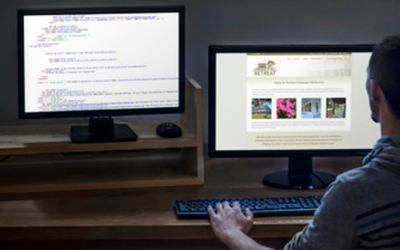
Let's be honest, building your own website felt like a smart move at the time. You saved money, you learned some new skills, and you got something up and running. But now? You're spending more time wrestling with plugins and templates than actually running your business. And that nagging feeling that your site isn't doing what it should be doing? That's your gut telling you something important.
If you've been tinkering with your DIY website for months (or years), constantly tweaking but never quite getting it right, you're not alone. And more importantly, you're not stuck there.
The DIY Trap: When "Good Enough" Stops Being Good Enough
Here's what usually happens: You start with a DIY website builder or a basic WordPress theme because you need an online presence now. It works fine at first, it's better than nothing, right? But as your business grows, that starter site starts showing its cracks.
The homepage that seemed "pretty good" now feels generic and forgettable. Your contact form gets spam but not real leads. Your blog exists but no one can find it. And every time you want to change something, you spend three hours on YouTube tutorials and still can't get it to work the way you envisioned.
Sound familiar?
The truth is, there's a massive difference between having a website and having a strategic business asset. One is just a digital brochure sitting in the corner of the internet. The other is actively working to attract the right clients, build trust, and drive revenue while you sleep.

Five Clear Signs It's Time to Call in a Professional
Not sure if you've reached that tipping point? Here are the telltale signs that it's time to stop tinkering and start investing in professional small business web design:
1. You're Spending More Time on Your Website Than Your Business
If you're dedicating hours each week to figuring out why your navigation menu broke again or why your images look fuzzy on mobile, that's time you're not spending on client work, business development, or, you know, actually making money. Your time has value, and at a certain point, the DIY route becomes the most expensive option.
2. Your Website Doesn't Reflect Where Your Business Is Now
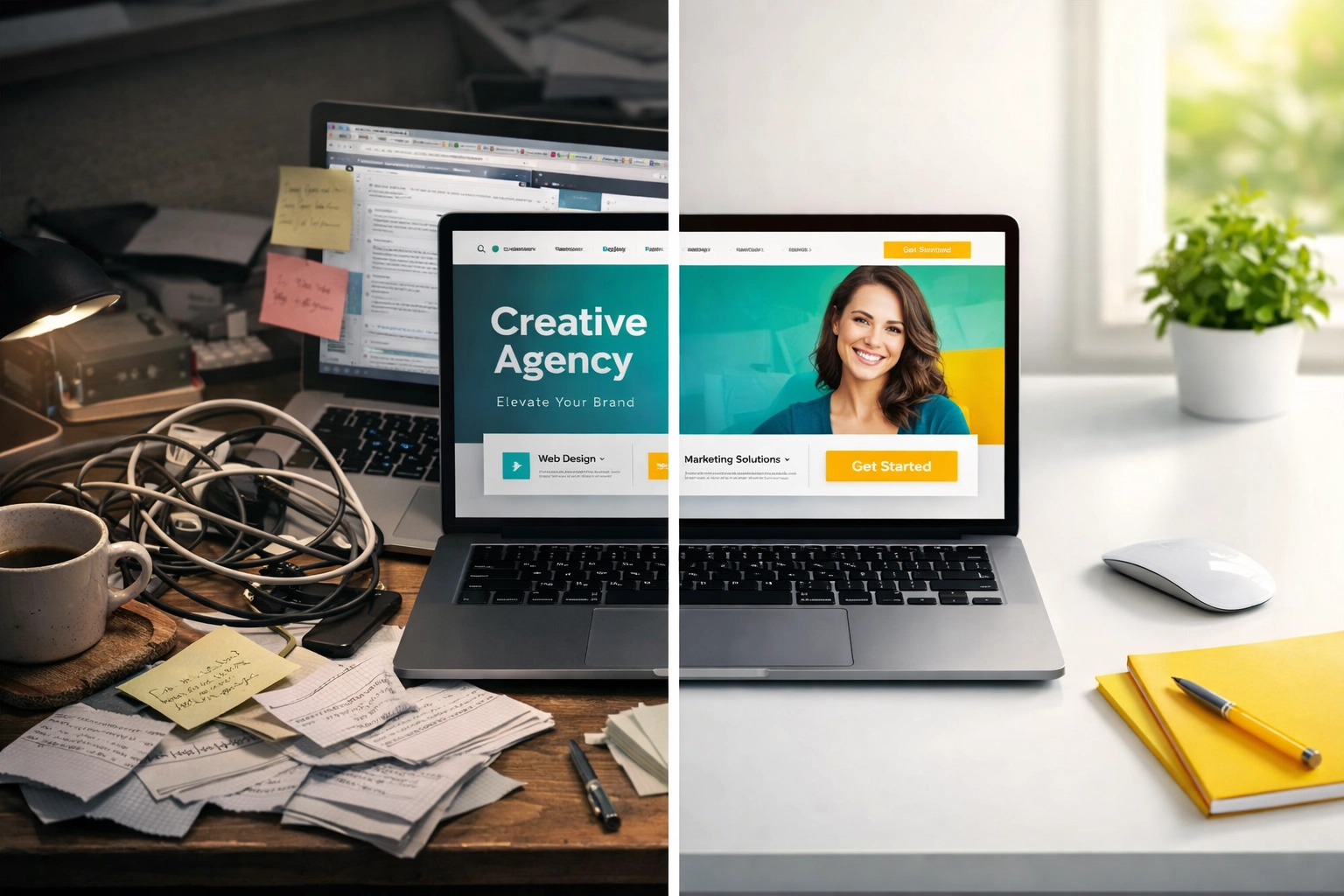
Your business has evolved. Your services are more refined. Your pricing has increased. Your ideal client has shifted. But your website? Still stuck in 2019, looking like everyone else's template-driven site. When there's a disconnect between the quality of your work and the quality of your online presence, you're leaving money on the table.
3. You're Not Getting the Results You Need
A website isn't just about looking pretty, it needs to perform. If your site isn't generating leads, converting visitors, or ranking in search results for the terms that matter, something's broken. And no amount of tinkering with fonts or colors is going to fix a foundational strategy problem.
4. You Know What You Want But Can't Execute It
This one's particularly frustrating. You have a clear vision for what your website should do and how it should feel, but you lack the technical skills or design expertise to make it happen. You're stuck between what you want and what you can actually build, and that gap is costing you opportunities.
5. Your Competitors' Websites Make Yours Look Amateur
We hate to say it, but if potential clients are comparing your site to competitors and choosing them because their online presence feels more professional and trustworthy, you've got a problem. First impressions matter, and in many cases, your website is the first impression.
What Professional Web Design Actually Gives You
When you hire a website consultant, you're not just paying someone to make things prettier (though that's a nice bonus). You're investing in expertise that extends far beyond aesthetics. Here's what you're really getting:
Strategy Before Design
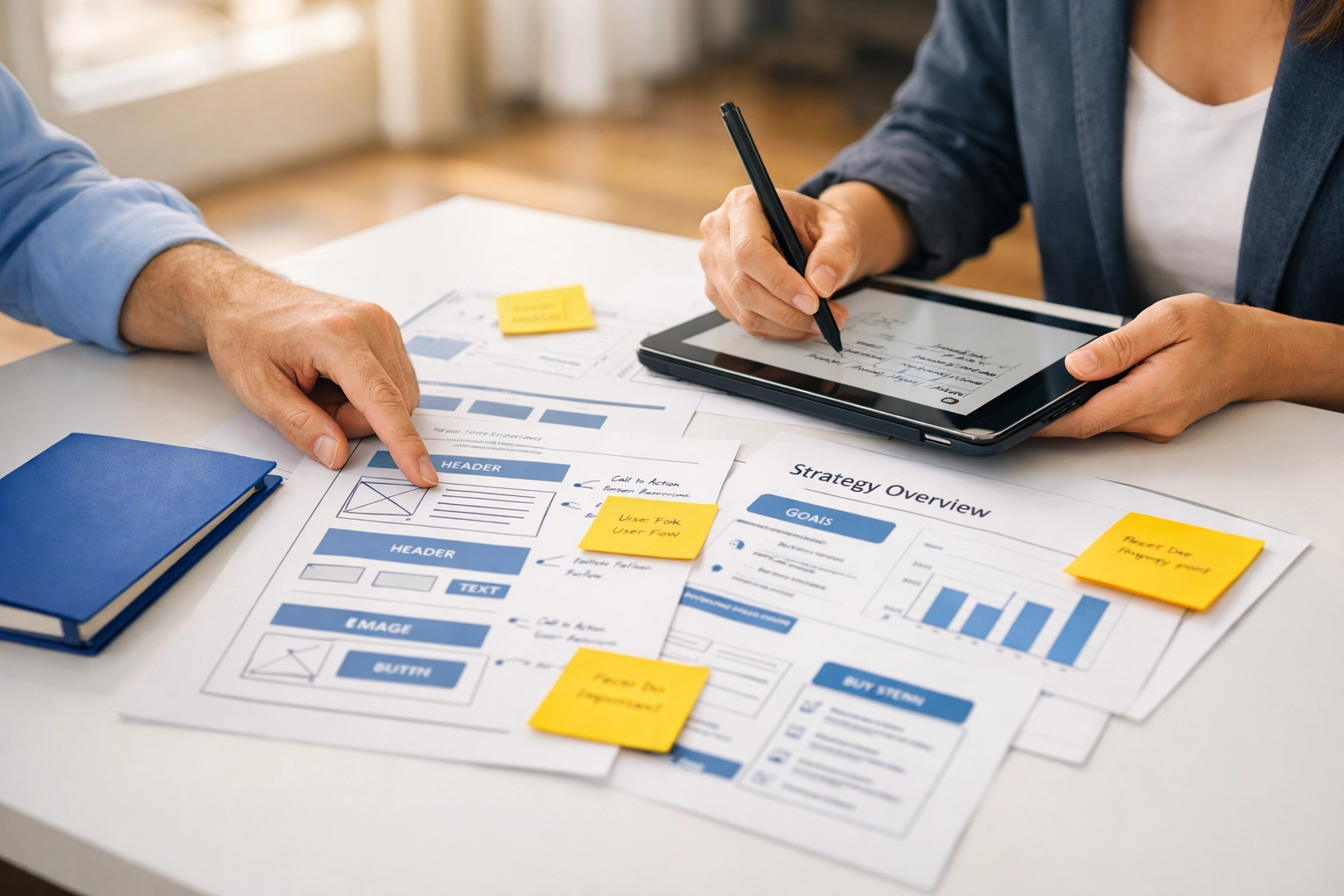
This is where the magic happens, and where most DIY websites fall apart. A professional doesn't just ask "what colors do you like?" They dig into your business goals, your target audience, your competitive landscape, and your unique value proposition. They map out user journeys. They think about conversion points. They consider how the site will be maintained long-term.
The design comes after the strategy is locked in, not before. That's how you end up with a website redesign that actually moves the needle for your business instead of just looking nice.
Custom WordPress Website Design (Not Just a Dressed-Up Template)
There's a world of difference between a template you bought for $59 and a custom WordPress website design built specifically for your business. Custom doesn't necessarily mean "built from scratch", it means thoughtfully crafted to serve your specific needs, with clean code, strategic functionality, and design elements that reinforce your brand positioning.
We've written before about whether you really need custom WordPress website design, and the short answer is: if your business is serious about growth, yes.
SEO That Actually Works
Here's something most DIY website builders overlook: search engine optimization isn't just about stuffing keywords into your pages. It's about site structure, page speed, mobile responsiveness, quality content, user experience, and about a hundred other technical factors that require expertise to get right.
A professional website consulting approach builds SEO into the foundation: not as an afterthought. That means your site has a fighting chance of being found by the people who are actively searching for what you offer.
Time and Sanity Back in Your Life
Look, we get it: there's a certain satisfaction in figuring things out yourself. But there's also a profound relief in handing a complex project to someone who knows exactly what they're doing and can deliver results in weeks instead of months of your spare time.
When you stop tinkering, you free up mental bandwidth for the things only you can do in your business. That's not just about efficiency: it's about sustainable growth.
How to Know You're Actually Ready to Hire
Wanting a better website is one thing. Being ready to invest in professional WordPress web design is another. Here's what needs to be true before you take the leap:
Your Business Foundation is Solid
You have consistent revenue, a clear service offering, and a good understanding of who your ideal clients are. You're not still figuring out your business model: you're ready to scale it.
You Have a Realistic Budget
Professional web design is an investment, not an expense. If you're looking for a $500 solution to a $5,000 problem, you're not ready yet. But if you understand that a strategic website can generate returns that far exceed the initial investment, you're in the right mindset.
You Can Commit Time to the Process
Even though you're hiring a professional, your input is crucial. You'll need to provide content, give feedback, and participate in strategic conversations. A website project is a collaboration: not a "set it and forget it" transaction.
You Have Clear Goals
"I want a better website" isn't a goal: it's a wish. "I want to generate 10 qualified leads per month" or "I want to rank on page one for [specific keyword]" or "I want to increase my conversion rate from 2% to 5%": those are goals a professional can work with.
What to Expect When You Work With a Website Consultant
If you've never hired a professional before, the process might feel mysterious. Here's generally how it works:
Discovery and Strategy Phase
This is where we dig into your business, your goals, your audience, and your competitive landscape. We audit your current site (if you have one), identify gaps and opportunities, and create a strategic roadmap. This phase is about asking the right questions: not jumping straight to design.
Design and Development
With strategy locked in, we move into creating the visual design and building out the actual site. This typically involves design mockups for your review, revisions based on your feedback, and then development of the fully functional site. For a standard small business web design project, this usually takes 4-8 weeks, though more complex projects can take longer.
Testing and Launch
Before your site goes live, we test everything: functionality, responsiveness, load times, forms, links, SEO elements. You get a chance to review the site on a staging server before it hits the public web. Then we launch, monitor for any issues, and make sure everything's running smoothly.
Ongoing Support
A good web design relationship doesn't end at launch. Whether it's monthly maintenance, content updates, or ongoing optimization, your site should evolve as your business evolves.
The Bottom Line
There's no shame in starting with DIY: everyone does. But there comes a point where continuing to tinker becomes more costly than investing in professional help. If you've been nodding along to most of this article, that point is probably now.
Your website should be working for you, not creating more work. It should be generating leads, building credibility, and supporting your business goals: not sitting there as a digital brochure that you're embarrassed to share.
Ready to stop tinkering and start getting real results from your online presence? Let's talk strategy before design and build you a site that actually works as hard as you do.

- Small Business Web Design 101: Why Your Website Needs a Strategy, Not Just a Template - March 16, 2026
- Does AI Really Help Small Business SEO? Here’s the Truth - March 12, 2026
- Top 10 Website Features Every Small Business Needs in 2026 - March 12, 2026